
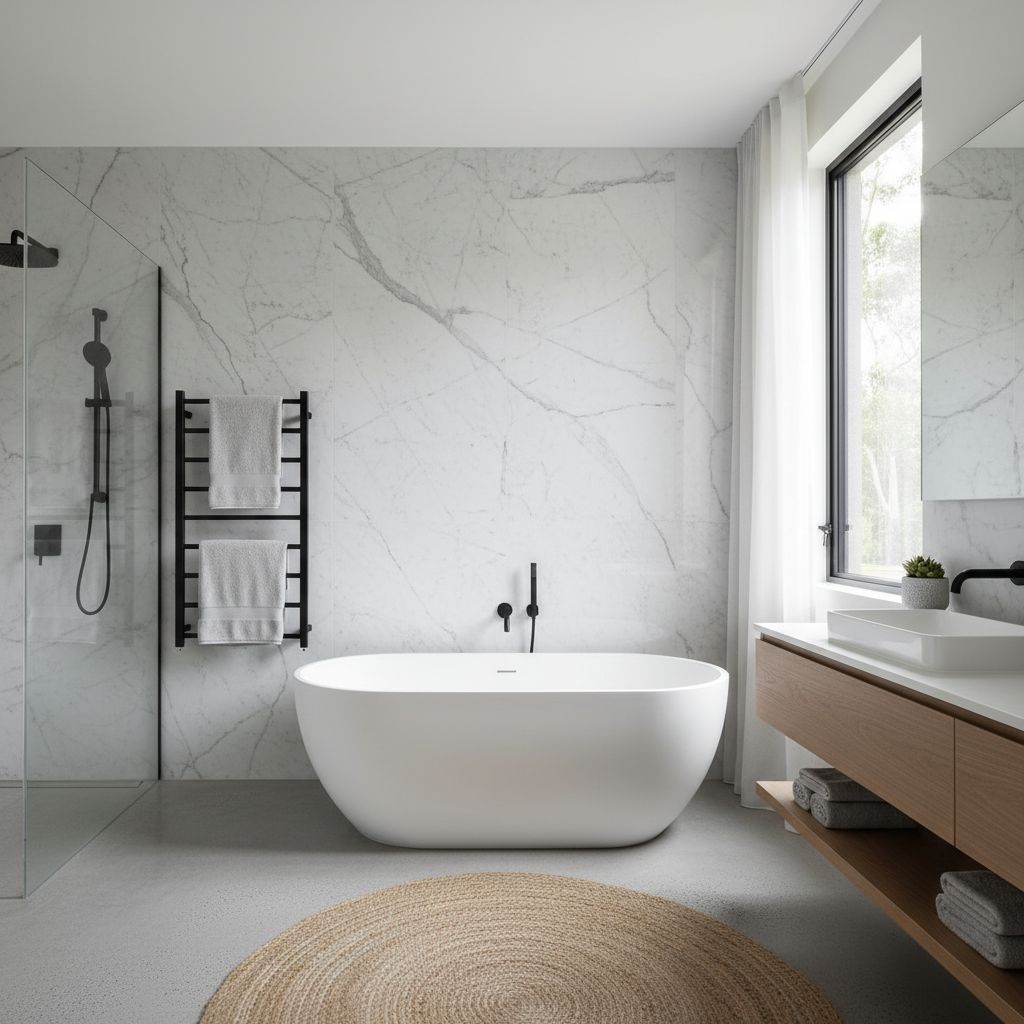
A bathroom needs light where people use it. A bright ceiling does not necessarily make a face easy to see in the mirror, and an illuminated mirror does not necessarily light the floor or shower entry. Before choosing fittings for a Pakenham renovation, describe the tasks, users and times of day. Then develop the mirror and lighting arrangement together. This guide helps you prepare that brief; the electrical design, fitting suitability and installation belong with your electrician.
Describe the tasks before choosing a light fitting
List the activities that take place at the basin. Shaving, applying makeup, cleaning contact-lens cases, brushing hair and helping a child all involve different viewing positions. Consider whether someone stands close to the mirror, sits, or shares the basin with another person. A light selected only for its appearance may leave the most important task in shadow. Write the task beside the position where it happens so the lighting discussion starts with the person rather than the ceiling plan.
Include the activities away from the mirror. People need to see the shower entry, find a towel and recognise items on the floor. Bathing may call for a different atmosphere from cleaning the room. An ensuite used before dawn also has a relationship with the bedroom: a bright light spilling through an open doorway may disturb someone sleeping. These are useful design constraints for the electrician, even before any decorative fixture has been shortlisted.
Separate necessary functions from preferences. Clear mirror viewing may be essential, while a lit niche may be optional. Simple switching could matter more than a colour-changing feature. Rank the functions so that the design can remain useful if a preferred product is unavailable or unsuitable. A brief built around activities is easier to adapt than one that specifies a particular mirror before anyone has checked the rest of the room.
Check what the mirror actually reflects
Draw the mirror wall as an elevation, showing the basin, tap, cabinet and nearby window. Add the approximate eye levels of the people using it. The usable reflected area should suit those people, rather than merely align with a tile joint or a standard cabinet size. A mirror mounted for one tall user may be inconvenient for someone shorter. Ask to review the position from the intended standing or seated location before final approval.
Consider reflections from the opposite wall. A ceiling fitting that seems well placed in plan may appear as a bright spot in the mirror. A window behind the user can change the contrast between their face and the background. Look at the existing room at different times of day and note which reflections bother you. These observations give the designer something specific to address, such as a reflected downlight near eye level or morning sunlight across one side of the basin.
Mirror cabinet doors introduce another detail. Their edges and joints can divide the reflection, and an open door can change the viewing angle. Check whether a side light will obstruct the door or reflect uncomfortably when it moves. The bathroom storage guide covers cabinet use and internal capacity. Reviewing storage and reflection together avoids choosing a cabinet that performs one role well but makes the other frustrating.
Distinguish face lighting from background glow
Look at where light reaches the face. A light located behind the user may illuminate the room while leaving the face comparatively dark. A ceiling source above the head can create shadows that are unhelpful for close grooming. Discuss lighting from the front or sides with the lighting supplier, and compare properly installed display examples where available. The goal is comfortable visibility for the intended task, not simply the largest advertised output.
An illuminated mirror can provide useful light, decorative glow, or a combination of both. Ask the supplier which role the product is designed to perform. A band of light behind the mirror mainly seen on the wall should not automatically replace a task-lighting plan. Request the product information and consider it in the actual room, including the distance from the mirror to the user's face. A product photograph rarely shows how the light behaves during shaving or makeup application.
Show the basin depth and standing position on the same drawing. A deep vanity places the user farther from the mirror than a shallow one. A high countertop basin can also change the comfortable viewing position. If the basin or cabinet is substituted later, review the mirror arrangement again. The lighting brief is attached to the finished geometry of the room, so it should be checked alongside the fixture specification.
Evaluate glare and reflective surfaces
Glossy tiles, polished tapware and glass can reflect light in ways that are difficult to judge from a small sample. Bring the selected finish samples to the lighting discussion. A fitting that appears comfortable against a matte wall may create a bright reflection beside a mirror or on a shiny splashback. Ask how the light is directed and whether the source itself will be visible from ordinary positions in the room.
Consider the view from the bath as well as from the doorway. A person reclining may look directly towards a ceiling fitting that is unobtrusive when standing. A decorative pendant may sit in a different sightline from a recessed light. Do not solve an uncomfortable view by improvising a shade or altering a fitting. Describe the sightline to the designer and choose a suitable arrangement before installation.
Brightness and comfort are not interchangeable. If a proposed arrangement feels harsh in a showroom, record why: visible points of light, strong contrast, a reflected source or difficulty seeing detail. This is more useful than asking for something less bright without explanation. Where display conditions differ from the bathroom, treat the demonstration as a comparison rather than a promise. The final room's size, surfaces and daylight will all influence the result.
Make colour choices as a coordinated set
Light colour affects how tile, paint and skin appear. Compare your preferred fitting with the chosen finishes and ask for the manufacturer's colour information. Avoid selecting each product in isolation under a different showroom's lighting. A warm-looking mirror, a cooler ceiling fitting and a separate niche light may produce an unintended mixture when switched on together. Record the selected settings or product variants so the order matches the decision.
Colour rendering describes another aspect of how a light presents objects. Ask the lighting supplier for the relevant product information if accurate colour judgement is important for makeup or grooming. Do not infer performance from a marketing description such as natural light. Where possible, view skin tones and familiar colour samples under comparable display products. The point is to make a practical comparison, not to turn a single catalogue figure into a guarantee of how the room will look.
A fitting with selectable colour settings can offer flexibility, but ask how settings are changed and retained. A household may prefer one agreed setting rather than repeated cycling each time a switch is used. Record which setting was selected at handover. If a future replacement is required, having the exact product and setting is more helpful than remembering that the original light looked pleasantly warm.
Keep the controls understandable
Group controls by the way the room is used. Mirror task lighting and general room lighting may benefit from separate control. An evening bath could use a different combination from morning grooming. Explain those scenarios to the electrician rather than prescribing circuits yourself. Ask for a simple description of what each switch or control will operate and review it with the other members of the household.
Think about visitors and children who do not know the system. A control should be easy to identify without repeatedly testing several unrelated functions. Touch controls built into a mirror may be convenient, but ask how they behave after a power interruption and whether the previous setting returns. If there is an app, confirm that ordinary use remains straightforward for someone without that app. The bathroom should not depend on one household member being available to explain the lighting.
Dimming needs product coordination. Give the electrician the exact fitting details and ask them to confirm the proposed control is compatible. Ask the supplier whether all selected lighting features can be dimmed, or whether some remain at a fixed output. Do not assume a decorative mirror and a ceiling light respond identically. An agreed control schedule prevents the disappointment of discovering after installation that a feature operates differently from the way the household expected.
Leave wet-area electrical decisions to the electrician
The positions of electrical fittings in a bathroom need professional assessment. Provide the complete plan, including shower glass, bath, basin and any heated rail, rather than sending only a photograph of the desired light. Product suitability depends on where and how it is installed. An online listing that calls a fitting suitable for bathrooms does not settle every location in your particular room. Ask the electrician to check the proposed product before you purchase it.
Energy Safe Victoria's electrical safety guidance says electrical work should be carried out by a licensed electrician, including changes to switches and power points. Keep your involvement to planning, selecting and recording. Do not open fittings, move wiring or experiment with electrical parts to test an idea. If an existing fitting is damaged or suspect, have it assessed rather than using it as a basis for a new lighting experiment.
Discuss maintenance access. Some mirrors contain lighting components that need a defined way to be serviced or replaced. Ask whether access is from the front, behind the mirror or through another location, and record the manufacturer's instructions. A large glued or tightly fitted installation may complicate future access. Resolve that detail with the installer while the room is being designed, not when a component needs attention after the bathroom is complete.
Turn the lighting brief into a handover record
Hypothetical example: an ensuite user dislikes the shadow under their eyes when shaving and the light reaching the bedroom early in the morning. Their brief asks for comfortable face lighting on its own control and a general light that can remain off during that routine. The designer then checks suitable fittings and positions. This is a clearer starting point than ordering additional downlights and hoping that a brighter ceiling will solve both problems.
Keep the approved mirror elevation, fitting codes, finishes and control schedule in one folder. Mark any substitution before it is ordered. A different mirror may have its cable entry or controls in another position even when its outside size matches. Ask the electrician and cabinet maker to review changes affecting both trades. The record should show what was actually installed, rather than retaining only the original shortlist.
At handover, ask for a demonstration of each control using the installed system. Check the ordinary viewing positions and note questions while the installer is present. Record the chosen settings and where the instructions are stored. This is also a useful time to confirm the replacement process for lamps or other serviceable components. A considered lighting plan ends with a room the household knows how to use, without guessing what each switch does or how the mirror is maintained.
Your planning checklist
Complete the remaining lighting decisions before fittings are ordered. Tick each item when you have an answer written down. This checklist stays on this page and sends nothing.
0 of 5 decisions recorded. Complete the remaining lighting decisions before fittings are ordered.